Tony Gwynn and Mark McGwire could help the FBI with a question a collector couldn’t easily settle. They could look at a signature sold under their names and tell investigators when it hadn’t come from them. The FBI says both helped identify forged autographs during Operation Bullpen. Agents then needed to follow the goods back to people who knew what they were selling. [1]
The FBI still has some of the baseballs. The names on them look familiar. In the agency’s artifact photograph, the balls bearing supposed Babe Ruth signatures are identified as forgeries recovered in the operation. [3]
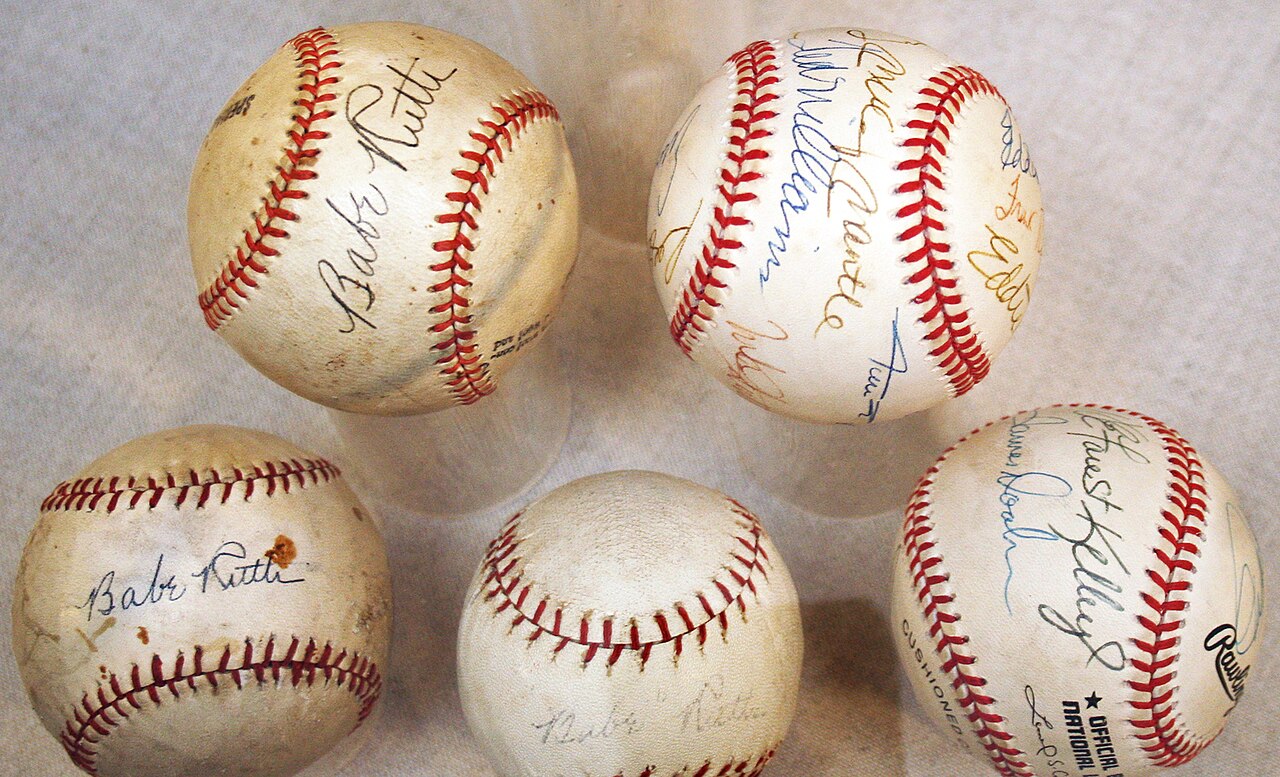
Federal Bureau of Investigation (FBI) · Image source · Public domain · Commons-provided resized image; no content edits.


A buyer who could listen
An FBI investigation in Chicago called Operation Foul Ball had led to convictions in several states. In 1997, agents in San Diego drew on its findings and began Operation Bullpen with federal prosecutors and the IRS. They set up the Nihon Trading Company in Oceanside, California. An undercover agent posed as a distributor buying American memorabilia to send to Asia. The FBI could take possession of the goods and record what the sellers said about them. [1] [4]
Some sellers, according to the FBI, spoke more freely when they believed the goods would leave the country. Agents collected more than a thousand recordings during the first phase. Some captured people discussing their role in forging, certifying or distributing goods they knew were false. Even a breakfast meeting in Carlsbad became part of the record when agents overheard participants discussing their suspicions about law enforcement. [1] [4]

User:JDrewes see www.jandrewes.de · Image source · CC BY-SA 3.0 · Commons-provided resized image; no content edits.

The certificate had a seller too
A buyer might see a signed baseball and a separate certificate. In the cases the FBI investigated, the certificate could come through the same chain as the forgery. A false signature and a false claim of authentication reinforced each other. The recordings helped investigators establish who knew the claim was false. A lab examiner could ask a different question, such as whether the ink or the object fit the era in which someone was supposed to have signed it. [1] [6]
The October searches
On October 13, 1999, agents executed about 60 search warrants in five states. They seized cash and thousands of forged items. The first phase produced 26 convictions. The investigation continued into celebrity photographs and online sales, where some sellers claimed people they sent to public appearances had collected the signatures. The FBI’s 2005 overview reported 63 convictions overall, 18 rings dismantled and more than $300,000 in restitution paid to over a thousand victims. [1] [2] [4]
Major League Baseball introduced its authentication program in 2001. For eligible items, it links an identifier to a signing or game use that an authenticator witnessed. The FBI’s photographed baseballs carry their own documented history now. They’re evidence of what somebody tried to sell a collector as a piece of Babe Ruth’s life. [3] [5]
Case brief
San Diego / Oceanside, California · 1997–2005
- Recorded outcome
- FBI’s 2005 overview reported 63 charges and convictions and 18 forgery rings dismantled. Counts and values are dated agency totals, not one defendant’s judgment.
Key moments
Case photographs
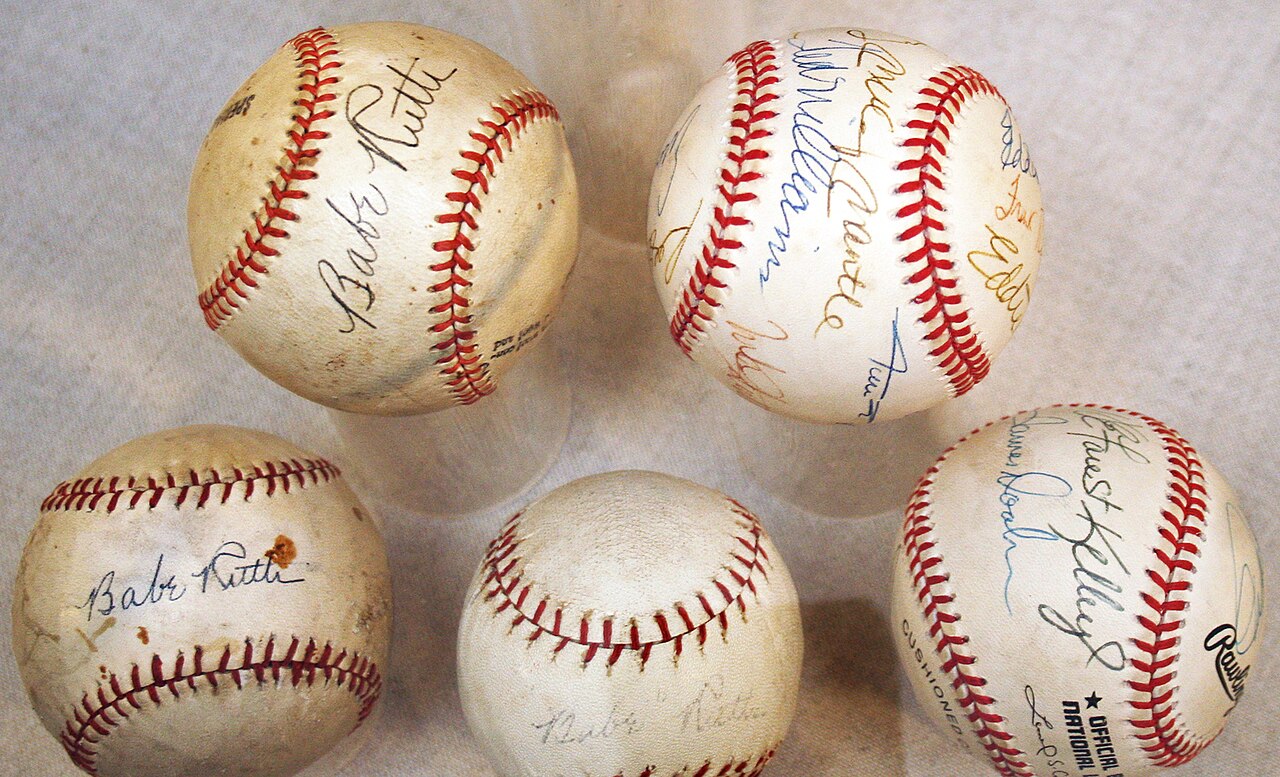
Recovered forged baseballs Baseballs with forged Babe Ruth signatures recovered in Operation Bullpen.
Evidence photograph · Federal Bureau of Investigation · U.S. public domain
Look closer · 8 visuals
Inside the evidence.
Open a visual to explore what it contributed to the case—and the limits of what it shows. Photographs, historical reproductions and original illustrations are individually labeled. Open the notes for each image’s source, credit, and limitations; setting photographs do not depict crime scenes.
The chain that sold credibility
Original editorial illustration — not an actual evidence photograph or exhibit.
Read the evidence notes
The FBI investigated connected roles in making, certifying and selling counterfeit memorabilia.
A false item in a shop does not alone prove that every handler knowingly joined the crime.
The trading-company cover
Original editorial illustration — not an actual evidence photograph or exhibit.
Read the evidence notes
Nihon Trading Company was the undercover vehicle described in FBI accounts.
This is an explanatory diagram, not a reproduction of business stationery or an operational guide.
Knowledge captured on recordings
Original editorial illustration — not an actual evidence photograph or exhibit.
Read the evidence notes
The FBI identified recordings of knowing involvement as key evidence of the fraud.
More than a thousand recordings does not mean more than a thousand confessions.
A certificate is a claim
Original editorial illustration — not an actual evidence photograph or exhibit.
Read the evidence notes
The investigation exposed certificates that did not provide the independence buyers assumed.
Generic diagram; not a reusable certificate template or a claim that all certificates are false.
Three different money measures
Original editorial illustration — not an actual evidence photograph or exhibit.
Read the evidence notes
The 2005 overview reported these separately. Each answers a different question about the operation’s effect.
Do not add the figures as though they measure the same thing or equate estimates with court-proven loss.
An expanding prosecution
Original editorial illustration — not an actual evidence photograph or exhibit.
Read the evidence notes
The operation developed over several years and included multiple prosecutions.
Totals are dated FBI reports, not a single joint verdict against everyone ever named.
Recovered forged baseballs
Actual recovered artifacts, photographed by the FBI.
Read the evidence notes
Actual case artifacts: baseballs bearing forged Babe Ruth signatures recovered in Operation Bullpen, photographed and published by the FBI. These are forgeries, not genuine Ruth autographs.
Commons-provided resized image; no content edits. The source and reuse license are linked below.
Source 3 ↗ · Federal Bureau of Investigation (FBI) · Image source · Public domain
San Diego’s skyline viewed from Coronado in November 2007
Geographic context photograph — not a crime-scene image.
Read the evidence notes
San Diego’s skyline viewed from Coronado in November 2007. Geographic context for the FBI investigation; not an undercover-operation photograph.
Commons-provided resized image; no content edits. The source and reuse license are linked below.
User:JDrewes see www.jandrewes.de · Image source · CC BY-SA 3.0
★ Key evidence used in a conviction · ✓ Exclusion or reversal · ◇ Disputed evidence · ⊘ Excluded at retrial · ◆ Identity / investigative finding, not a conviction. A symbol does not mean one item proved the whole case.
Follow the locations
Put the story on the map.
Follow the dated entries, then select an event to find its regional setting. Shared-location pins open a group of events. Evidence symbols identify important findings and their limitations.
Open the map in its own window ↗Sources & further reading
- Operation Bullpen — FBI San Diego investigative accountUndercover company, recordings, athletes, October 1999 searches and contemporary estimates.
- Operation Bullpen: America’s National Pastime — FBIDated phase-one and phase-two conviction counts.
- Babe Ruth Baseballs — FBI artifact collectionIdentification of actual recovered forged baseballs; photograph separately licensed as a federal work via Commons.
- Operation Bullpen Overview — FBIExpanded phases, 63 overall charges and convictions, restitution and seizure categories.
- MLB Authentication — official program informationProgram began in 2001; witnessed signing or use and identification records.
- Inside the Questioned Documents Unit — FBI transcriptMaterial dating and document examination; loose spoken chronology not used to override the 1997 launch in contemporaneous history.
Editorial review: 2026-11-12 · 466 words