On the Monday after Sara Tokars was killed, her cousin Mary Rose Taylor went to Christine Ambrusko’s house to look for papers. Taylor had asked Sara to copy them. Sara had left them with Christine, her sister, and asked her to keep them safe. Taylor made another set of copies and took them to police. Among the records were details of offshore bank accounts and a banking license issued by Montserrat. [1]
Sara had worked on accounts receivable in her husband’s law office. She’d talked about divorce. A neighbor testified that Sara believed she’d found financial information that could help her keep her two sons if there was a custody fight. The papers Taylor took to police were part of what Sara had been able to put aside for herself. [1]
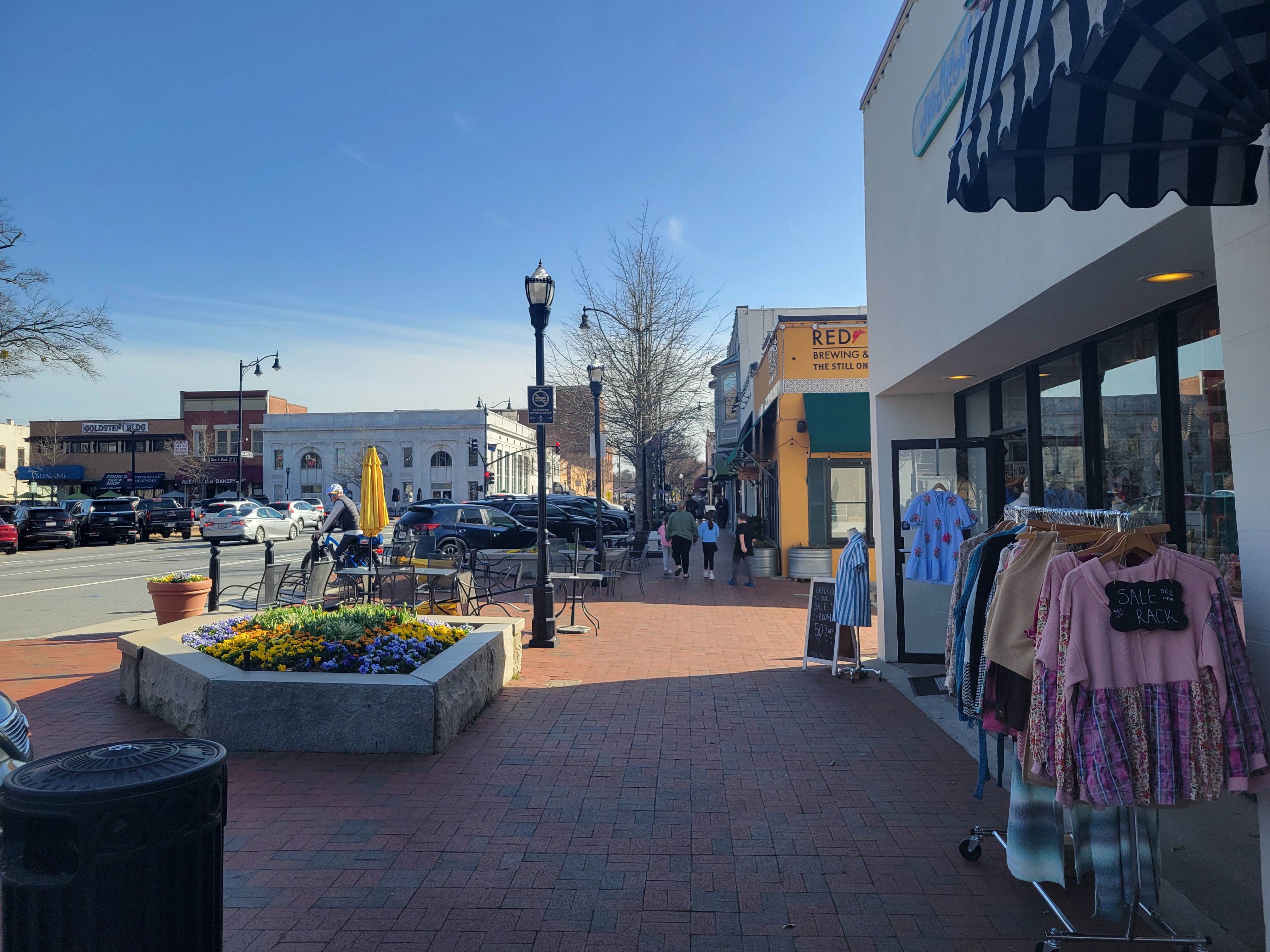
John Phelan · Image source · CC BY 4.0 · Original file; no edits.

The work behind the papers
Fred Tokars had worked as a prosecutor and taught law enforcement officers about money laundering. In private practice, he helped set up businesses. Witnesses at his federal trial described drug proceeds going into clubs and other businesses with paperwork that put different people forward as owners. When investigators began asking about a club called Diamonds and Pearls, an assistant U.S. attorney warned Tokars that his own role in incorporating it could become an issue. [1]
Eddie Lawrence, who ran a construction business and had been involved in counterfeiting, testified that he and Tokars had worked together on businesses used to launder money. Lawrence also said Tokars offered him $25,000 and a share of the insurance proceeds to have Sara killed. Records showed Tokars had raised her coverage from $250,000 to $1.75 million in 1989. The policy gave jurors an amount they could check. The offer came from Lawrence’s testimony. [1]

Marc Merlin · Image source · CC BY-SA 4.0 · Original file; no edits.

Ten minutes in Montgomery
Sara and her sons went to Florida for Thanksgiving in 1992. On Sunday, November 29, Tokars met Lawrence in Georgia. Lawrence said they discussed when Sara would be home. Tokars then went to Montgomery, Alabama, and left his hotel number with his answering service. A client named Wilbert Humphries recalled being surprised to see him at the jail on a Sunday. Their visit took about ten minutes. [1]
Lawrence had offered Curtis Rower $5,000 to kill Sara. Back in Georgia, Lawrence drove him to the house. When Sara arrived with the boys, Rower forced her back into her vehicle. She was shot with both children present. Lawrence and Rower gave differing accounts of who handled the gun at the end. Phone records helped the prosecution show contact among people and places that day, while witnesses supplied their accounts of what had been arranged. [1]
The two trials
Police arrested Lawrence and Rower in December. The federal case against Tokars and James Mason brought the business records and the murder plot into the same trial. The court moved the trial to Birmingham because of pretrial publicity. Tokars received concurrent life sentences on the racketeering and murder-for-hire counts, and the Eleventh Circuit affirmed in 1996. Georgia separately prosecuted Sara’s murder. A 1994 ruling concerned which judge would hear that case. The state conviction came in 1997. The Atlanta Journal-Constitution reported that Tokars died in federal custody in 2020. [1] [2] [3]
The bank papers could tell police about money. The fact that police had them at all came down to people doing what Sara had asked. She’d put the copies where her sister could get to them. On Monday, her family knew where to look. [1]
Case brief
Cobb County / Atlanta, Georgia · 1992
- Recorded outcome
- Federal convictions and life sentences affirmed in 1996; state murder conviction in 1997. Tokars’s death in custody was reported in May 2020.
Key moments
Case photographs
- Sara Tokars’s funeral
Archival photograph of the December 1992 service
Photo at source · Digital Library of Georgia · Atlanta Journal-Constitution archive
Look closer · 8 visuals
Inside the evidence.
Open a visual to explore what it contributed to the case—and the limits of what it shows. Photographs, historical reproductions and original illustrations are individually labeled. Open the notes for each image’s source, credit, and limitations; setting photographs do not depict crime scenes.
The papers Sara saved
Original editorial illustration — not an actual evidence photograph or exhibit.
Read the evidence notes
Sara’s sister and cousin described preserving and delivering offshore financial documents. The record gives Sara’s actions a place in the investigation.
The papers did not independently identify the gunman or prove every laundering allegation.
Three roles in the alleged plan
Original editorial illustration — not an actual evidence photograph or exhibit.
Read the evidence notes
Lawrence described instructions from Tokars and his own approach to Rower. The prosecution used participant testimony with other evidence.
The diagram shows the prosecution’s account of roles; it does not resolve every conflict between Lawrence and Rower.
A real trip, a disputed purpose
Original editorial illustration — not an actual evidence photograph or exhibit.
Read the evidence notes
The hotel stay and Humphries’s testimony about the short visit were evaluated against evidence of planning in Georgia.
Presence in another state did not answer whether Tokars commissioned a killing. This is not a route reconstruction.
What telephone records show
Original editorial illustration — not an actual evidence photograph or exhibit.
Read the evidence notes
Call records supported connections on the relevant day. Their significance came from the broader chronology.
A telephone log does not reproduce what was said or identify every person using a phone.
Insurance and the alleged offer
Original editorial illustration — not an actual evidence photograph or exhibit.
Read the evidence notes
The policy increase and Lawrence’s account of an offer including insurance proceeds formed separate strands of the state’s theory of motive.
An insurance policy alone is not proof of murder, and an offered sum is not proof of a completed payment.
Separate proceedings
Original editorial illustration — not an actual evidence photograph or exhibit.
Read the evidence notes
The federal verdict, federal affirmance and state murder trial belong to different proceedings.
The 1994 Georgia judge-assignment decision is not a murder verdict.
West Park Square in Marietta, Georgia
Geographic context photograph — not a crime-scene image.
Read the evidence notes
West Park Square in Marietta, Georgia. Present-day geographic context for Cobb County; not the Tokars home or a crime-scene photograph.
Original file; no edits. The source and reuse license are linked below.
John Phelan · Image source · CC BY 4.0
Atlanta skyline photographed in 2020
Geographic context photograph — not a crime-scene image.
Read the evidence notes
Atlanta skyline photographed in 2020. Geographic context for the law practice and financial investigation; not a view from the night of the murder.
Original file; no edits. The source and reuse license are linked below.
Marc Merlin · Image source · CC BY-SA 4.0
★ Key evidence used in a conviction · ✓ Exclusion or reversal · ◇ Disputed evidence · ⊘ Excluded at retrial · ◆ Identity / investigative finding, not a conviction. A symbol does not mean one item proved the whole case.
Follow the locations
Put the story on the map.
Follow the dated entries, then select an event to find its regional setting. Shared-location pins open a group of events. Evidence symbols identify important findings and their limitations.
Open the map in its own window ↗Sources & further reading
- United States v. Tokars, 95 F.3d 1520 — Eleventh CircuitTrial evidence, copied documents, calls, alibi, federal charges, sentences and affirmance.
- Tokars v. Superior Court of Cobb County — Georgia Supreme CourtJudicial-assignment dispute in the separate pending state murder prosecution; not the final verdict.
- Fred Tokars, lawyer who set up murder of his wife, dies in prison — AJCLater state-trial context, federal conviction year and death as reported by his attorney.
Editorial review: 2026-11-12 · 576 words