At 5:37 p.m. on April 28, 2004, Bill McGuire called the gas company. He and his wife, Melanie, had just bought their first house. He transferred the account, then called two friends to tell them the good news. In the days that followed, people who knew how often Bill used his phone and BlackBerry would try to work out which messages had actually come from him. [1]
Bill was a computer analyst at a college in Newark. Melanie worked as a nurse in Morristown. They had two boys. Dr. Bradley Miller, a partner at the practice, testified that he and Melanie had been having an affair since 2002. Prosecutors would argue that Melanie wanted to leave her marriage without risking a fight over the children. They would need evidence of what happened after those calls. [1]
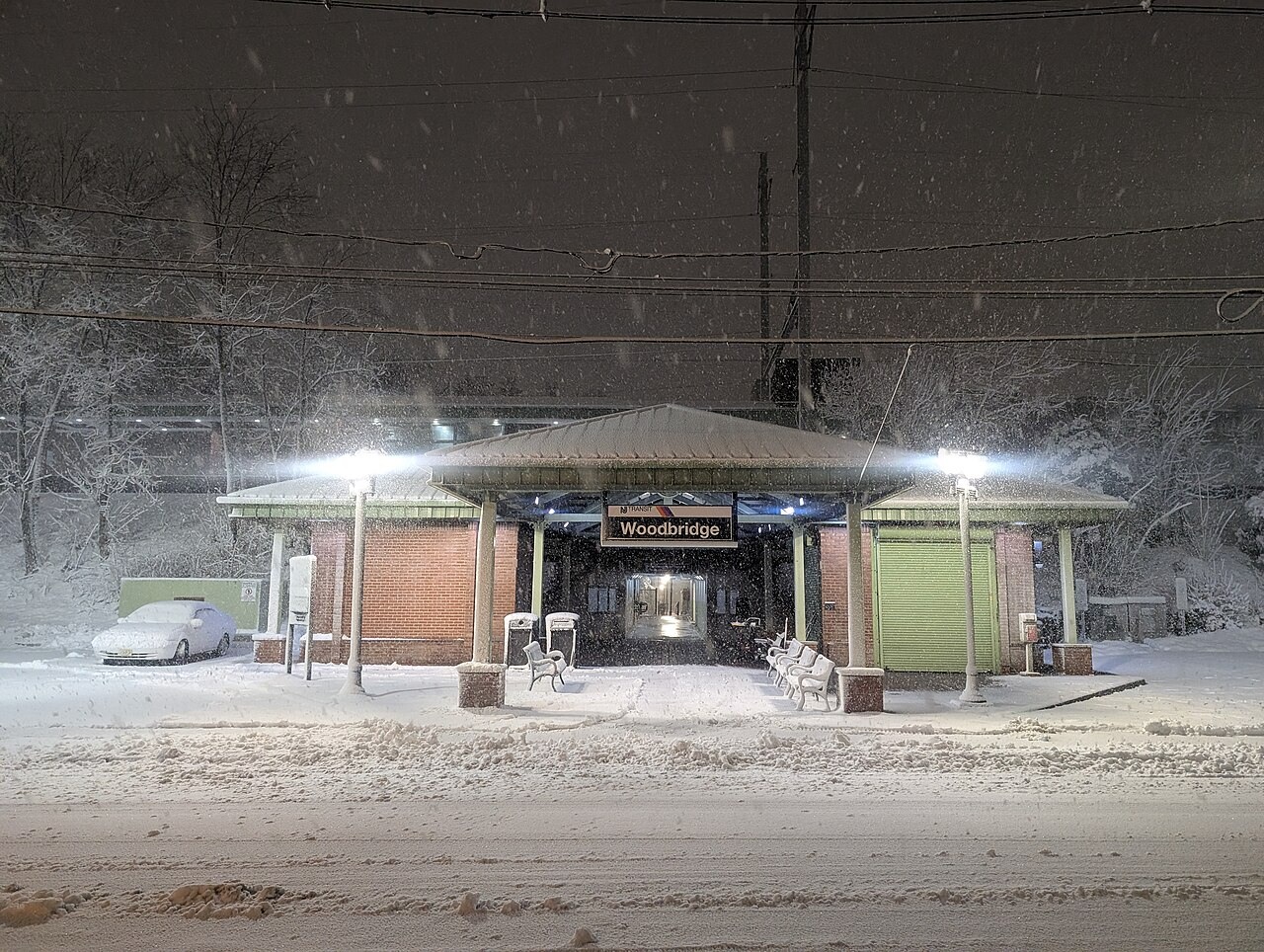
Olegnaumov · Image source · CC0 · Geographic context; not authentic crime evidence. The building or landscape is public geographic context; no event is assigned to it.

Bill’s car
Melanie told a detective Bill had assaulted her in an argument and walked out. She suggested he or his car might turn up in Atlantic City. Police did find his Nissan there. The motel’s grainy surveillance footage put it in the lot at 12:40 a.m. on April 30. Later, Melanie told Miller she had moved it there herself after finding it at a casino, then taken cabs. Police found no record of the fare they looked for. [1]
The glove compartment held a bottle of chloral hydrate. A pharmacy had filled the prescription the morning of the house closing in the name of a patient at Melanie’s practice. The patient said she’d never received it. Miller denied writing it. Prosecutors argued Melanie had used the sedative on Bill, though the toxicology reports found no evidence of drugs in his body. [1]
Hudconja · Image source · CC BY-SA 4.0 · Geographic context; not authentic crime evidence. This historic courthouse is county context, not identified as the trial venue.

What came out of the water
Three matching suitcases were recovered near the Chesapeake Bay Bridge-Tunnel in May. The medical examination established that Bill had been shot. Two days before the closing, Melanie had bought a .38-caliber Taurus revolver. The bullets were consistent with several makes, including Taurus. Investigators never recovered the gun, and extensive searches of the Woodbridge apartment yielded no trace evidence of a killing there. [1][2]
Someone helping with the move had kept the industrial garbage bags in which Melanie packed Bill’s clothes. Investigators compared those with bags recovered from the suitcases. State witnesses examined lines left in the manufacturing process and argued that the bags shared a source and production period. Sally Ginter, a polymer chemist for the defense, said the results failed to establish the claimed match. [1]

Kevin Coles from USA · Image source · CC BY 2.0 · Geographic context; not authentic crime evidence. This public bridge view is regional context, not a verified disposal viewpoint or route.

The jury’s two answers
In April 2007 the jury convicted Melanie of murder, a weapons offense, desecration of remains and perjury. It acquitted her on separate charges over anonymous communications pointing toward other suspects. The judge imposed life for murder and a consecutive five-year sentence for perjury. New Jersey’s Appellate Division upheld the verdict and sentence in 2011, including the decision to admit the disputed bag testimony. [1][2]
The state’s account of the route to Virginia and the precise sequence in the apartment depended on inference. The three calls after the closing sit at a different place in the record. They’re a few minutes when people could still hear directly from Bill, and two friends heard that he had a house. [1]
Case brief
Woodbridge / Atlantic City, New Jersey · 2004
- Recorded outcome
- Melanie McGuire was convicted in 2007 and sentenced to life plus five years. The judgment was affirmed in 2011. New Jersey’s Appellate Division affirmed denial of state post-conviction relief in 2017, and a federal court denied habeas relief in 2021.
Key moments
People in this case
- Melanie McGuire
Convicted of murdering William McGuire
Photo at source · CBS News · case photographs
Look closer · 9 visuals
Inside the evidence.
Open a visual to explore what it contributed to the case—and the limits of what it shows. Photographs, historical reproductions and original illustrations are individually labeled. Open the notes for each image’s source, credit, and limitations; setting photographs do not depict crime scenes.
The purchase was not the weapon match
Original editorial illustration — not an actual evidence photograph or exhibit.
Read the evidence notes
The caliber and manufacturer evidence supported an inference, not a unique firearm identification.
No actual murder weapon photograph is available here.
The sedative theory had limits
Original editorial illustration — not an actual evidence photograph or exhibit.
Read the evidence notes
The state alleged sedation, but toxicology did not establish it.
Handwriting evidence did not uniquely identify Melanie as the writer.
Two tolls and a contested explanation
Original editorial illustration — not an actual evidence photograph or exhibit.
Read the evidence notes
The state used ordinary account records to challenge the disappearance account.
No complete disposal route is drawn.
Plastic bags under dispute
Original editorial illustration — not an actual evidence photograph or exhibit.
Read the evidence notes
The state connected bag manufacture; the defense chemist disputed the interpretation.
A bag comparison is not a unique fingerprint of a buyer.
Small traces, limited inferences
Original editorial illustration — not an actual evidence photograph or exhibit.
Read the evidence notes
Trace testimony helped the state connect objects and household material.
A DNA association alone does not specify when or how a trace arrived.
Keep both halves of the verdict
Original editorial illustration — not an actual evidence photograph or exhibit.
Read the evidence notes
The jury did not convict on the anonymous-communication indictment.
Those alleged communications must not be narrated as proven acts.
Woodbridge railway station in New Jersey
Context photograph — not an actual crime exhibit. The building or landscape is public geographic context; no event is assigned to it.
Read the evidence notes
Woodbridge railway station in New Jersey. Geographic context photograph; not a crime-scene photograph or an original evidence exhibit. The building or landscape is public geographic context; no event is assigned to it.
Geographic context; not authentic crime evidence. The building or landscape is public geographic context; no event is assigned to it. The source and reuse terms are linked below.
Olegnaumov · Image source · CC0
The former Middlesex County Courthouse in New Brunswick
Context photograph — not an actual crime exhibit. This historic courthouse is county context, not identified as the trial venue.
Read the evidence notes
The former Middlesex County Courthouse in New Brunswick. Geographic context photograph; not a crime-scene photograph or an original evidence exhibit. This historic courthouse is county context, not identified as the trial venue.
Geographic context; not authentic crime evidence. This historic courthouse is county context, not identified as the trial venue. The source and reuse terms are linked below.
Hudconja · Image source · CC BY-SA 4.0
An aerial view of the Chesapeake Bay Bridge-Tunnel
Context photograph — not an actual crime exhibit. This public bridge view is regional context, not a verified disposal viewpoint or route.
Read the evidence notes
An aerial view of the Chesapeake Bay Bridge-Tunnel. Geographic context photograph; not a crime-scene photograph or an original evidence exhibit. This public bridge view is regional context, not a verified disposal viewpoint or route.
Geographic context; not authentic crime evidence. This public bridge view is regional context, not a verified disposal viewpoint or route. The source and reuse terms are linked below.
Kevin Coles from USA · Image source · CC BY 2.0
★ Key evidence used in a conviction · ✓ Exclusion or reversal · ◇ Disputed evidence · ⊘ Excluded at retrial · ◆ Identity / investigative finding, not a conviction. A symbol does not mean one item proved the whole case.
Follow the locations
Put the story on the map.
Follow the dated entries, then select an event to find its regional setting. Shared-location pins open a group of events. Evidence symbols identify important findings and their limitations.
Open the map in its own window ↗Sources & further reading
- State v. McGuire — New Jersey Appellate DivisionDetailed trial record, admitted evidence, limitations, defense, bag-comparison dispute, mixed verdicts and affirmance.
- Melanie McGuire sentenced — New Jersey Attorney GeneralOfficial verdict and sentencing dates, broad investigation and precise parole-ineligibility calculation. Prosecution account distinguished from judicial analysis.
- State v. McGuire, A-2150-14T4 — New Jersey Appellate DivisionAffirms denial of state post-conviction relief and summarizes the contested bag and computer discovery requests.
- McGuire v. Attorney General, document 15 — U.S. District Court for New JerseyDenies the federal habeas petition and declines a certificate of appealability.
Editorial review: 2026-11-12 · 538 words