Two days after NASA scientist Everett Gibson reported his safe missing, a man calling himself Orb Robinson supplied sample numbers to people he thought were buying moon rocks. The numbers matched Gibson’s inventory. The buyers were undercover investigators. [3]
The investigation had started in June 2002, when a rock collector in Belgium became suspicious of a seller who advertised through the Mineralogy Club of Antwerp. The collector contacted authorities. Agents posed as his relatives in the United States and arranged a meeting at a restaurant in Orlando. When they began talking price, the safe was still in Gibson’s laboratory. [2] [3]
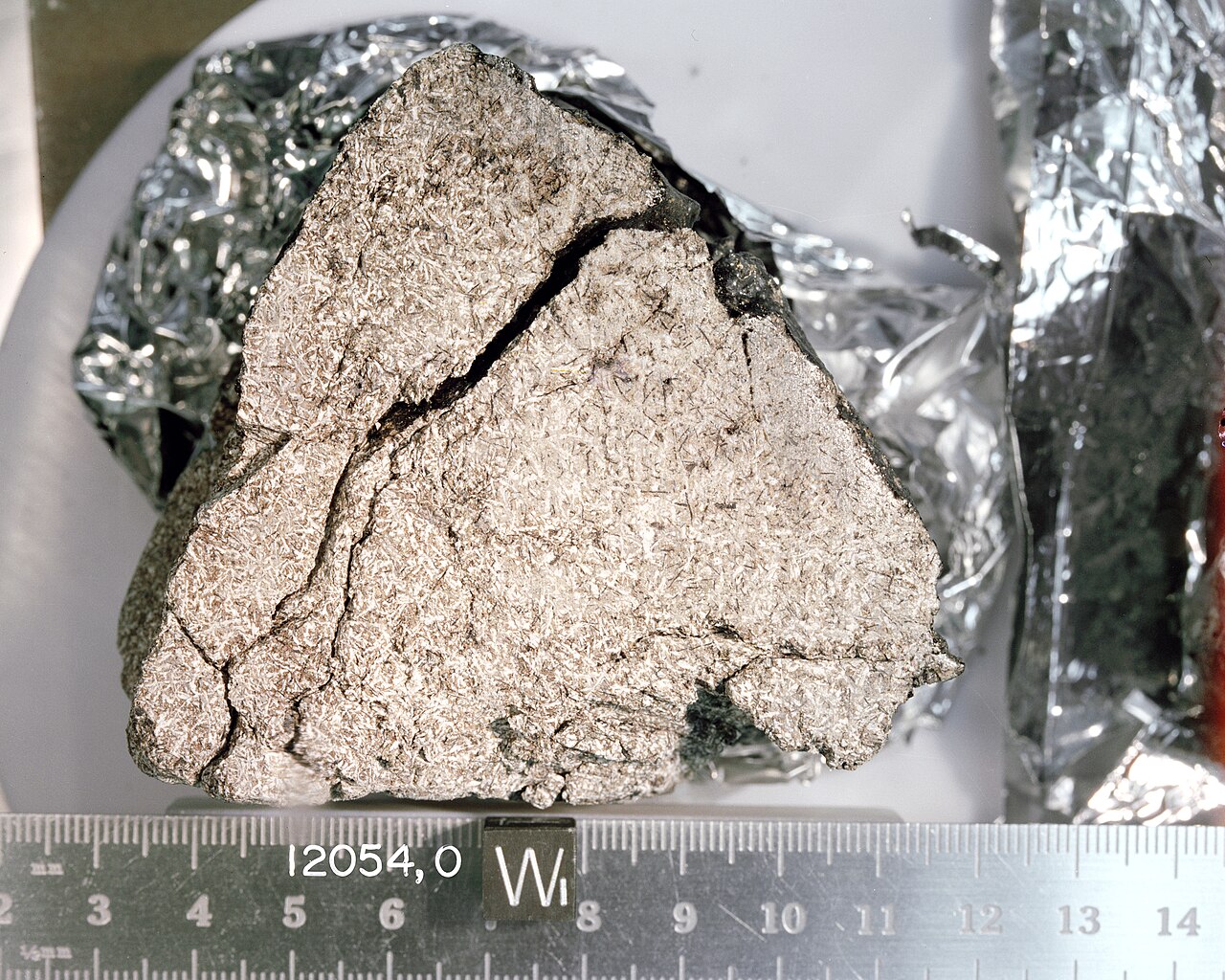
NASA · Image source · Public domain · This photograph provides setting or historical context. It is not an authentic crime exhibit.

Six hundred pounds out of the lab
On July 13, Thad Roberts and fellow interns Tiffany Fowler and Shae Saur used their NASA IDs to enter Johnson Space Center. They took a 600-pound safe from Gibson’s lab. It held samples from every Apollo mission that landed on the Moon, material from Martian meteorites and years of Gibson’s handwritten research notes. [1] [3]
Investigators traced messages to servers at Johnson Space Center and the University of Utah. On July 20, Roberts, Fowler and Gordon McWhorter met the agents in Orlando. Roberts gave his real name. The agents went with them to a hotel, retrieved rocks and made arrests. Saur was arrested in Houston that day. Roberts, Fowler and Saur pleaded guilty. McWhorter was convicted at trial. [2] [3]
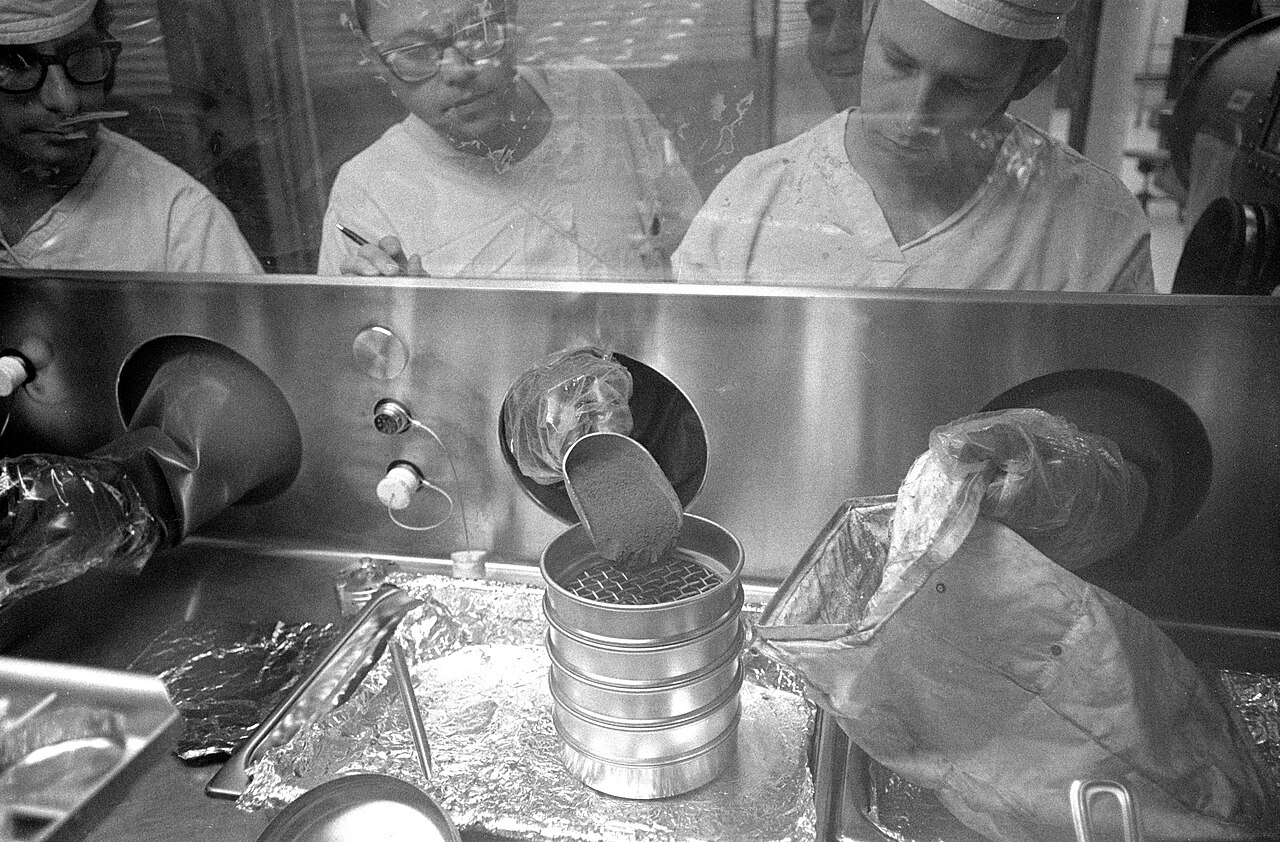
NASA Johnson Space Center · Image source · Public domain · This photograph provides setting or historical context. It is not an authentic crime exhibit.

What Gibson could still use
Gibson believed investigators had recovered all his lunar samples, but without his notebooks he couldn’t be sure. Some of the best-preserved material had been mixed with samples already used in experiments. Much of the Martian material remained missing. In the notebooks, Gibson had recorded each sample’s weight, what he’d done with it and what was left. Some of that work had never been published and could no longer be replicated. [1]
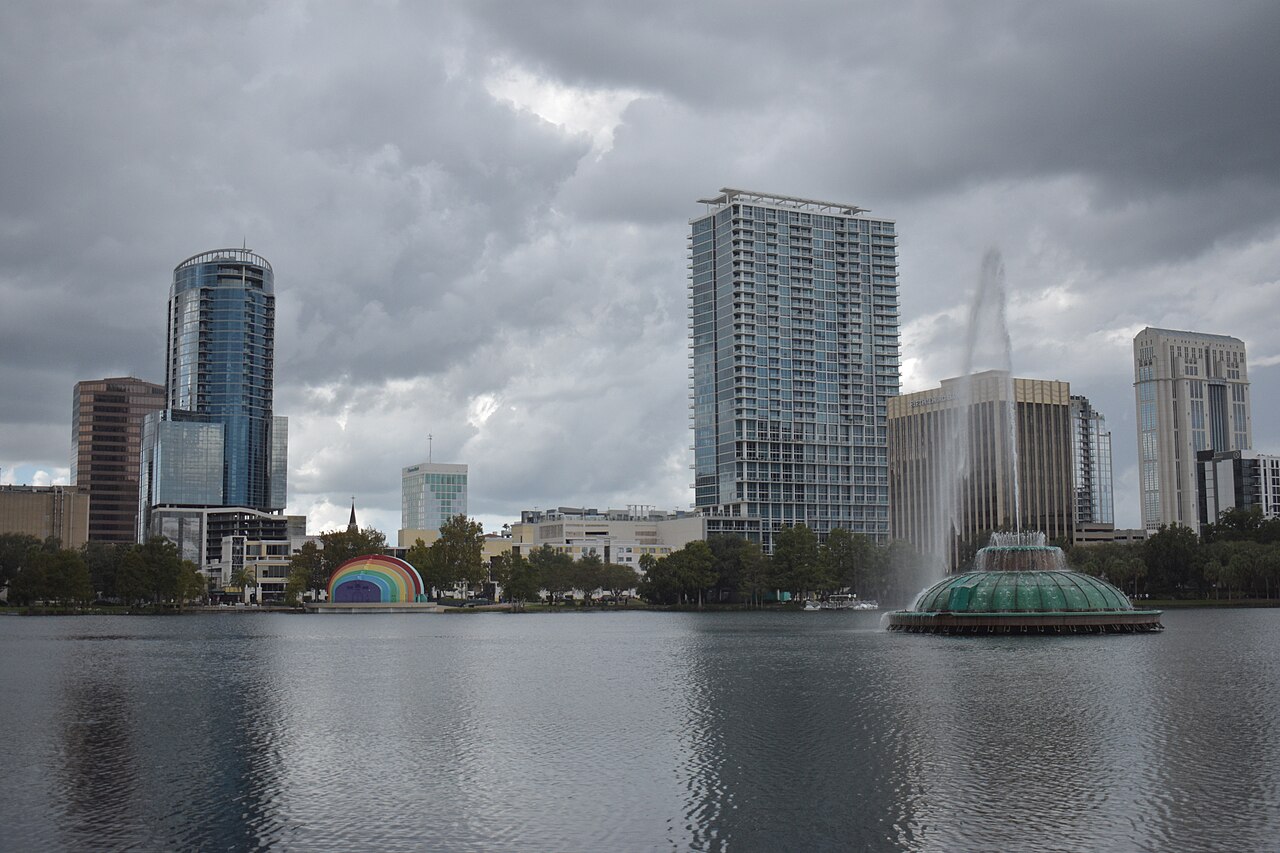
JER3L1337 · Image source · CC BY 4.0 · This photograph provides setting or historical context. It is not an authentic crime exhibit.

The second sentencing
The parties stipulated to a loss of $6,987,002 for sentencing. Roberts initially received 100 months, and the appeals court sent the case back because the record did not adequately support the increase for disruption to NASA’s work. At resentencing in 2005, Gibson testified about the missing notes, the research left unfinished and the months his colleagues spent on the investigation. The court imposed a total of ninety months. That included a concurrent sentence in a separate case involving stolen specimens from a Utah museum. The appeals court affirmed. [1]
NASA’s inspector general used a $21 million figure in its 2026 account of the theft. Gibson’s testimony put a different loss on the record. A specimen could come back without the notes that told him what he could still do with it. [1] [3]
Case brief
Orlando / Houston, Florida · 2002
- Recorded outcome
- Thad Roberts pleaded guilty; original 100-month sentence vacated, 90-month resentencing affirmed November 2005. Co-conspirators faced separate proceedings.
Key moments
People in this case
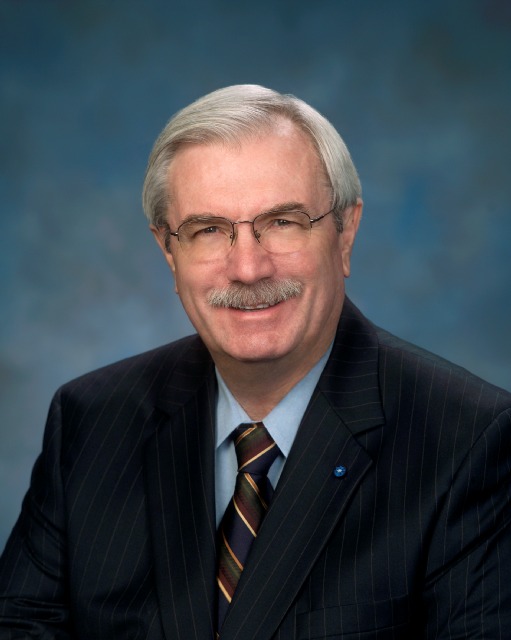
Everett Gibson The NASA scientist whose Johnson Space Center laboratory held the safe stolen in 2002. NASA published this portrait after the theft.
Official portrait · NASA via Wikimedia Commons · U.S. public domain- Thad Roberts
Pleaded guilty in the NASA moon-rock theft
Photo at source · CBS News · interview and photographs
Look closer · 9 visuals
Inside the evidence.
Open a visual to explore what it contributed to the case—and the limits of what it shows. Photographs, historical reproductions and original illustrations are individually labeled. Open the notes for each image’s source, credit, and limitations; setting photographs do not depict crime scenes.
A number broke the alias
Original editorial illustration — not an actual evidence photograph or exhibit.
Read the evidence notes
Matching sample numbers connected the advertised material to the missing safe.
A comparison diagram, not an authentic inventory printout.
The safe was heavy; the samples were small
Original editorial illustration — not an actual evidence photograph or exhibit.
Read the evidence notes
The court describes a safe, not 600 pounds of moon rocks.
Generic safe illustration; dimensions are not reconstructed.
The sale led to Orlando
Original editorial illustration — not an actual evidence photograph or exhibit.
Read the evidence notes
Agents posed as buyers and followed the samples across state lines.
No invented email wording or suspect travel route.
Recovery did not restore the science
Original editorial illustration — not an actual evidence photograph or exhibit.
Read the evidence notes
Gibson described why returned material could lose research usefulness without its records.
Some material remained missing; not a claim that all returned rocks had zero use.
Three different measures of loss
Original editorial illustration — not an actual evidence photograph or exhibit.
Read the evidence notes
The widely reported $21 million figure was not the same as the sentencing loss amount.
These values are dated and measure different things.
A sentence revised, a plea preserved
Original editorial illustration — not an actual evidence photograph or exhibit.
Read the evidence notes
The first sentencing reversal did not undo Roberts’s guilty plea.
The diagram tracks Roberts, not the other defendants’ sentences.
Apollo 17 lunar sample 70035, NASA context
NASA archival context — not the stolen samples or a theft photograph.
Read the evidence notes
Apollo 17 lunar sample 70035, NASA context. NASA archive photograph; not identified as a stolen specimen or a view of the 2002 theft.
This photograph provides setting or historical context. It is not an authentic crime exhibit. The source and reuse terms are linked below.
NASA · Image source · Public domain
Technicians handle Apollo 14 material in 1971
NASA archival context — not the stolen samples or a theft photograph.
Read the evidence notes
Technicians handle Apollo 14 material in 1971. NASA archive photograph; not identified as a stolen specimen or a view of the 2002 theft.
This photograph provides setting or historical context. It is not an authentic crime exhibit. The source and reuse terms are linked below.
NASA Johnson Space Center · Image source · Public domain
Orlando skyline beyond Lake Eola
Geographic context photograph — not a crime-scene image.
Read the evidence notes
Orlando skyline beyond Lake Eola. Geographic context photograph; not a crime-scene image or evidence of an event shown on the map.
This photograph provides setting or historical context. It is not an authentic crime exhibit. The source and reuse terms are linked below.
JER3L1337 · Image source · CC BY 4.0
★ Key evidence used in a conviction · ✓ Exclusion or reversal · ◇ Disputed evidence · ⊘ Excluded at retrial · ◆ Identity / investigative finding, not a conviction. A symbol does not mean one item proved the whole case.
Follow the locations
Put the story on the map.
Follow the dated entries, then select an event to find its regional setting. Shared-location pins open a group of events. Evidence symbols identify important findings and their limitations.
Open the map in its own window ↗Sources & further reading
- United States v. Roberts, 05-10995 — Eleventh CircuitPlea, stipulated loss, missing notes and material, disputed government disruption, resentencing and affirmance.
- The case of the stolen moon rocks — FBI archiveBelgian tip, alias, undercover purchase, recovered samples and separate prosecutions.
- Cracking the $21 million NASA moon-rock caper — NASA OIGJuly 2002 chronology, identities, matching sample numbers, email trail and arrest location. Government account.
Editorial review: 2026-11-12 · 437 words