Before Helle Crafts disappeared, she hired a private investigator and met with a divorce lawyer. The investigator documented Richard Crafts’s affair. Helle discussed custody of her children. On November 18, 1986, a coworker brought her home to Newtown, Connecticut. She had been making arrangements for a life she expected to be part of. No one reliably saw her after that evening. [1]
The next morning, Richard took the children and the au pair to his sister’s house in Westport. He said a snowstorm had knocked out the power. The house had alternative heat and a generator, witnesses later told the jury. When people asked where Helle was, Richard offered accounts involving overseas travel. A flight attendant could plausibly be out of town. The question was where this particular trip could be checked. [1]
The dates on the rental records
A freezer had arrived before Helle disappeared. Richard collected it on November 17, the day before her coworker dropped her off. He had also arranged for a truck and a woodchipper. When delivery of the truck was delayed, he used a rental. He collected the chipper on November 20 and returned both rented machines the next day. Those dates gave police a night to look at closely. [1]
Witnesses placed a truck and chipper near a steel bridge in Newtown during the evening and early morning. Around four, a coworker spoke to Richard in a Southbury school parking lot. Richard said he was clearing limbs from the storm. Prosecutors introduced evidence that there were no downed limbs that called for that work. The rental dates and the places where people had seen him gave the explanation a set of particulars investigators could test. [1]
What the searches turned up
Near the bridge, police found an envelope bearing Helle’s name and blue fabric similar to clothing she owned. The search yielded small human remains and dental crowns identified with her. Investigators also recovered Richard’s chainsaw underwater. Material on the saw and its blade included fibers and biological evidence that could be compared with material recovered along the river. The appellate court described several correspondences, including dental identification and biological categories consistent with Helle. The findings came from several kinds of examination. [1]
Richard denied killing Helle and said he did not know where she was. The prosecution argued that he had killed her and used the equipment to conceal her death. Jurors had to weigh the equipment trail, witness sightings, what police recovered and his explanations together. The first jury could not agree. A second convicted him of murder, and he received a 50-year sentence. [1]
The argument over what the jury heard
Richard’s appeal questioned the instructions on circumstantial evidence, publicity and the admission of remarks Helle had made about her fears and whether she would leave voluntarily. On July 6, 1993, the Connecticut Supreme Court affirmed. The majority held that the jury could weigh the full body of evidence under the reasonable-doubt standard. It did not have to decide each step in the chain separately beyond a reasonable doubt. Justice Robert Berdon dissented over the relevance and prejudicial effect of Helle’s earlier statements. [1]
The Newtown Bee reported in 2024 that Richard had been released in 2020. Helle’s plans, made in the weeks before her disappearance, remain part of what the court’s account gives us about her. She had hired someone to find out what was happening in her marriage. She’d asked a lawyer what she could do next. Those were the arrangements she left behind on November 18. [1] [2]
Case brief
Newtown, Connecticut · 1986
- Recorded outcome
- Richard Crafts convicted; 50-year sentence; reported released in 2020
Key moments
People and case photographs

Henry C. Lee The forensic scientist assisted Connecticut State Police with the Crafts investigation and testified for the prosecution. This portrait comes from a 2013 event.
Later portrait · Zrosen88 via Wikimedia Commons · CC BY-SA 3.0Cropped from the group photograph by Gaia Octavia Agrippa.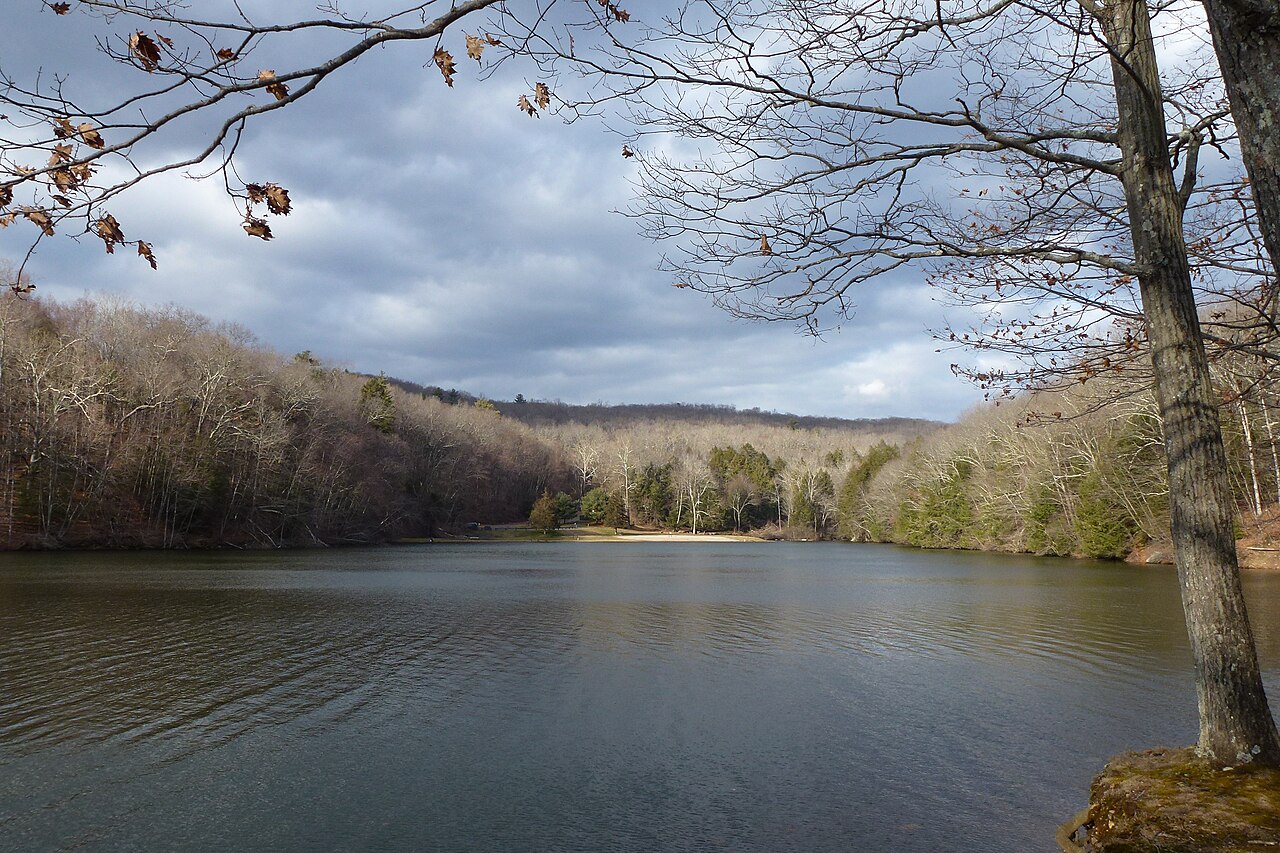
Lake Zoar on the Housatonic River This 2012 view from Kettletown State Park shows the river reservoir near the area where police searched for evidence.
Location photograph · Jllm06 via Wikimedia Commons · CC BY-SA 4.0Web-sized copy from Wikimedia Commons.- Helle Crafts
Murder victim
Photo at source · Forensic Files episode image on IMDb - Richard Crafts
Convicted of Helle Crafts’s murder
Photo at source · Connecticut Post · Associated Press courtroom photographs
Look closer · 3 visuals
Inside the evidence.
Open a visual to explore what it contributed to the case—and the limits of what it shows. These original illustrations explain the record; they are not photographs of the actual evidence.
The equipment calendar
Original editorial illustration — not an actual evidence photograph or exhibit.
Read the evidence notes
Purchases and rentals preceded and followed Helle’s disappearance. The narrow rental window connected the paperwork with witness sightings.
Original editorial diagram; no authentic receipt, rental contract or model of equipment is shown.
The dental link
Original editorial illustration — not an actual evidence photograph or exhibit.
Read the evidence notes
The court describes dental crowns associated with Helle among the recovered remains. Identification helped establish that the disappearance was a killing.
Schematic dental symbol only. It is not Helle’s dental chart, an actual crown, or a forensic comparison image.
Connections near the bridge
Original editorial illustration — not an actual evidence photograph or exhibit.
Read the evidence notes
An envelope bearing Helle’s name and material recovered near the bridge and on the chainsaw supplied overlapping links.
No remains are depicted. The court describes categories and partial matches; this was not a modern DNA-profile identification.
★ Key evidence used in a conviction · ✓ Exclusion or reversal · ◇ Disputed evidence · ⊘ Excluded at retrial · ◆ Identity / investigative finding, not a conviction. A symbol does not mean one item proved the whole case.
Follow the locations
Put the story on the map.
Follow the dated entries, then select an event to find its regional setting. Shared-location pins open a group of events. Evidence symbols identify important findings and their limitations.
Open the map in its own window ↗Sources & further reading
- State v. Crafts, 226 Conn. 237
- Lisa Peterson Presents New Information On Regina Brown’s Disappearance — The Newtown BeeBrief retrospective confirmation that Richard Crafts was released in 2020; not evidence linking him to Brown.
Editorial review: 2026-11-12 · 591 words