Harold Henthorn told a ranger about a white sheet on a cliff. Park staff had taken it down the week before Toni Henthorn fell nearby. That was a detail investigators could check against Harold’s account of how the couple ended up off the trail. In his car, a map bore a pink X in the area where she fell. [1]
Toni and Harold had gone to Rocky Mountain National Park in September 2012 for their twelfth anniversary. He said they’d changed plans to avoid crowds. The government would later argue the route was part of a plan to kill her. A jury convicted him of first-degree murder. [1] [2]
Leaving the trail
The couple were celebrating their twelfth wedding anniversary in September 2012. Photographs helped investigators reconstruct their movements after they left the established trail.
Toni fell more than 100 feet. The remote location delayed rescuers’ arrival, and she was dead when the first ranger reached her.
Harold described an accident.
The Tenth Circuit’s account [1] sets out why investigators questioned his version. He had said they originally intended to walk an easy route, then changed to the more demanding Deer Mountain trail. Toni had a history of knee problems that made the choice relevant.
The investigators’ task was not to assume that a difficult hike proved intent. It was to test his explanation against what he knew, where he had been and how the couple reached the cliff.
The visits that came before
Harold said he had made one scouting trip. Telephone records indicated at least eight or nine visits in the previous six weeks. He said the couple switched from the easier Bear Lake walk to Deer Mountain, which climbed steeply. Toni had undergone knee surgery. Investigators could set his accounts of the off-trail turn beside the phone records and the mark on the map. [1]
The telephone kept working
The emergency calls supplied another sequence that could be compared with records. During one call, a dispatcher tried to guide Harold through CPR and later testified that his behavior did not sound like the exertion she ordinarily heard from someone following the instructions. That was the dispatcher's assessment, supported in the prosecution's presentation by the medical examiner's observations; it was not a video of what happened at the cliff. [1]
Harold ended the call saying his phone battery was nearly exhausted. The court recounted twenty-two further calls and ninety-eight sent or received text messages afterward, including communications arranging a ride from Estes Park. The contrast gave investigators more than a general impression of suspicious behavior: they could compare a stated reason for ending emergency assistance with subsequent recorded phone activity. [1]
Those records help explain the case's cumulative force. Earlier knowledge of the location, descriptions that changed, communication records and financial arrangements addressed different parts of the account. None of the illustrations below is a photograph of the fatal act. They show why investigators and the jury questioned whether the fall was the accident Harold described. [1]
The insurance evidence
Investigators examined life-insurance arrangements and a recent change to an annuity beneficiary. The appellate record describes a substantial financial benefit Harold stood to receive.
Insurance was evidence of a proposed motive, not a complete explanation of the crime. The government combined it with the alleged planning, the route, his changing accounts and the physical circumstances.
A jury found him guilty of first-degree murder in 2015. The U.S. attorney’s announcement [2] confirmed the verdict.
He received a life sentence.
Why earlier incidents entered the trial
The appeal focused on the admission of evidence about prior similar incidents.
One involved the 1995 death of Harold’s first wife, Lynn, while they were changing a tire. Another concerned an earlier incident involving Toni.
The trial judge allowed particular evidence for a limited purpose under the rule governing other acts. The issue was whether it helped evaluate accident, intent or planning without unfairly encouraging a verdict based merely on character.
The defense argued that the evidence was prejudicial.
In 2017, the Tenth Circuit upheld the ruling and affirmed the conviction.
That does not amount to a separate murder conviction for Lynn’s death. The court’s decision concerned what evidence could be considered in Toni’s prosecution. Describing Harold as convicted of both wives’ murders would misstate the record.
When the ranger reached Toni, she was already dead. What could still be checked was the route the two had taken, the places Harold knew and the calls his phone made after he ended the emergency conversation. The jury found him guilty of her murder. The judgment the appeals court upheld was for Toni’s death. [1] [2]
Case brief
Rocky Mountain National Park, Colorado · 2012
- Recorded outcome
- Harold Henthorn convicted of first-degree murder; life sentence; 2017 appeal affirmed
Key moments
People and case photographs
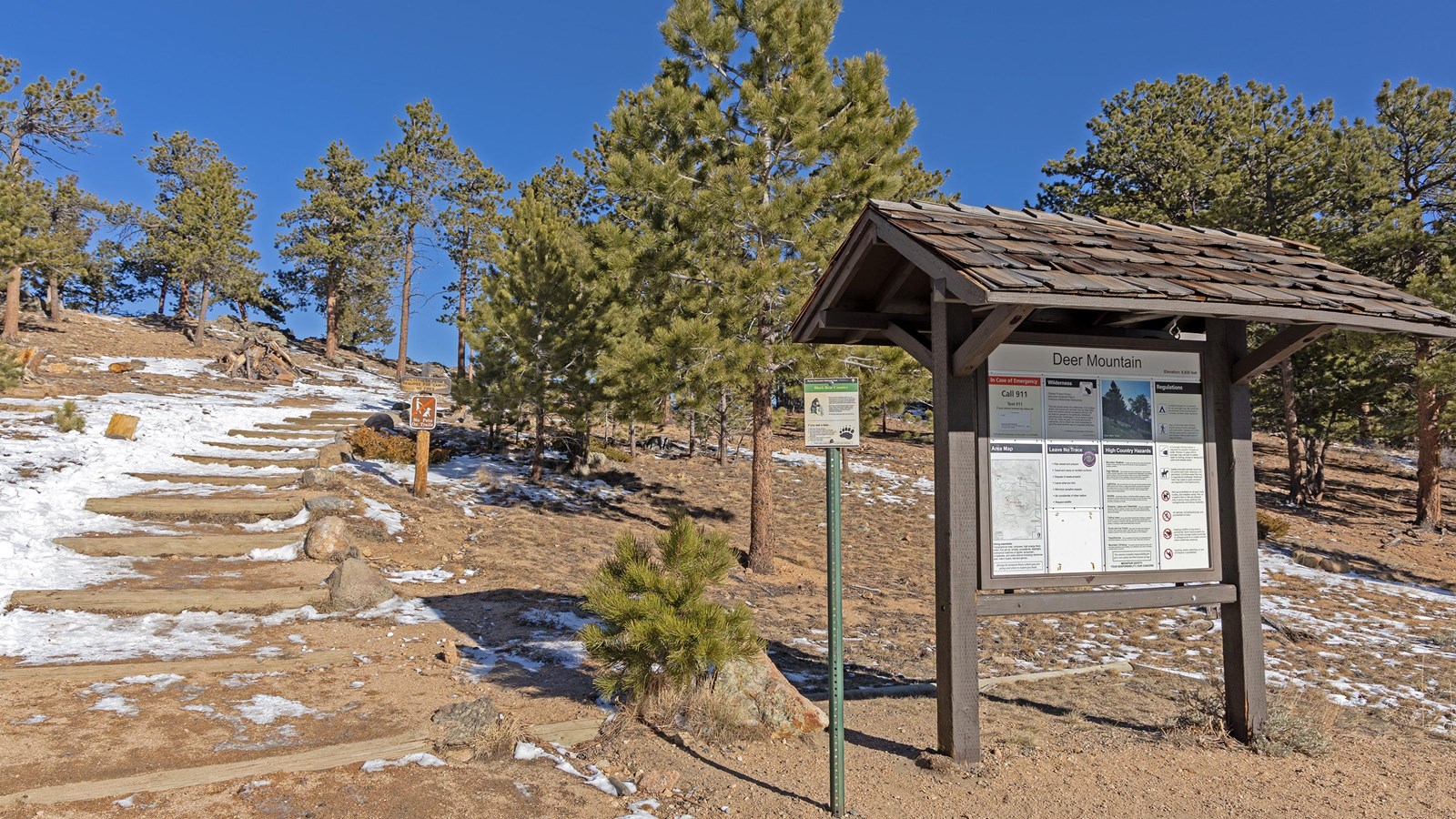
Deer Mountain trailhead A later view of the trailhead in Rocky Mountain National Park. The Henthorns hiked the Deer Mountain trail before leaving it for the area where Toni fell.
Location photograph · National Park Service, U.S. Department of the Interior · U.S. public domainNo claim to original U.S. Government works.- Toni Henthorn
Murder victim
Photo at source · CBS News · captioned case photographs - Harold Henthorn
Convicted of murdering Toni Henthorn
Photo at source · CBS News · captioned case photographs
Look closer · 3 visuals
Inside the evidence.
Open a visual to explore what it contributed to the case—and the limits of what it shows. These original illustrations explain the record; they are not photographs of the actual evidence.
The marked map
Original editorial illustration — not an actual evidence photograph or exhibit.
Read the evidence notes
The annotated map and visit records challenged the description of an unplanned detour.
Not Harold’s map. The diagram’s X is decorative and gives no actual fall location.
The phone after the battery warning
Original editorial illustration — not an actual evidence photograph or exhibit.
Read the evidence notes
The court compared the low-battery explanation with subsequent phone activity.
Schematic only; the image does not reproduce logs or a recording.
The financial arrangements
Original editorial illustration — not an actual evidence photograph or exhibit.
Read the evidence notes
Insurance and a changed annuity beneficiary were part of the prosecution’s financial-motive evidence.
Not an authentic policy. Financial benefit alone did not establish murder.
★ Key evidence used in a conviction · ✓ Exclusion or reversal · ◇ Disputed evidence · ⊘ Excluded at retrial · ◆ Identity / investigative finding, not a conviction. A symbol does not mean one item proved the whole case.
Follow the locations
Put the story on the map.
Follow the dated entries, then select an event to find its regional setting. Shared-location pins open a group of events. Evidence symbols identify important findings and their limitations.
Open the map in its own window ↗Sources & further reading
- United States v. Henthorn — Tenth CircuitEvidence at trial and ruling admitting prior similar incidents.
- DOJ: Jury finds Harold Henthorn guilty
Editorial review: 2026-11-12 · 769 words