Nicole VanderHeyden went out with her boyfriend, Douglass Detrie, on May 20, 2016. They became separated and argued over calls and texts. Detrie went home. The following day Nicole was found dead near a field in Brown County, Wisconsin. Investigators found some of her clothing near a freeway entrance and blood and hair outside a neighbor’s home. Each discovery gave them another place to account for. [1]

Michael Barera · Image source · CC BY-SA 4.0

Twelve steps
Detectives looked first at Detrie. His Fitbit logged twelve steps in the hours they were trying to account for. That small number gave them a reason to reconsider a theory that would have required him to be active during that stretch. The reading depended on whether he was wearing the device. The trial judge later let jurors hear the step counts and excluded the device’s sleep data. [1]
In June, Green Bay police interviewed George Burch in a separate vehicle investigation. Burch said he had been at a bar and had sent texts that would support his account. An officer asked about those messages, and Burch signed a consent form. The examiner made a full copy of the phone’s data. Police retained the copy after returning the phone. [1]

Mcgike · Image source · CC BY-SA 3.0

The sock and the stored file
In August, DNA from Nicole’s sock matched Burch. Brown County homicide detectives looked for prior police contact and found the Green Bay file. They reviewed the download, identified a Google account and saw that the phone had repeatedly accessed coverage of Nicole’s death. They obtained a warrant for Google’s records. The location data placed the phone near several places detectives already knew about, including the field and the freeway entrance. [1]
Burch testified that he met Nicole at a bar and that they left together. He denied killing her and told jurors that Detrie forced him to move her body. The prosecution disputed that account. The jury had both the phone’s movements and Burch’s explanation of how he came to make them. It convicted him of first-degree intentional homicide in 2018. He was sentenced to life without eligibility for release. [1] [2]
Warren LeMay from Covington, KY, United States · Image source · CC BY-SA 2.0

What jurors were allowed to hear
In 2021 Wisconsin’s Supreme Court upheld the judgment. The majority concluded that even assuming a constitutional violation, the officers’ conduct in this case did not call for excluding the phone evidence. The judges also upheld admission of the step records. Separate opinions disagreed about whether the phone search was lawful and whether the evidence should have been suppressed. The U.S. Supreme Court declined to review Burch’s case in January 2022. [1] [3] [4]
Case brief
Brown County and Green Bay, Wisconsin · 2016
- Recorded outcome
- George Burch convicted of first-degree intentional homicide in 2018 and sentenced to life without release eligibility. Affirmed June 29, 2021.
Key moments
People in this case
- Nicole “Nikki” VanderHeyden
Murder victim
Photo at source · Family obituary · Herald Times Reporter
Look closer · 9 visuals
Inside the evidence.
Open a visual to explore what it contributed to the case—and the limits of what it shows. Photographs, historical reproductions and original illustrations are individually labeled. Open the notes for each image’s source, credit, and limitations; setting photographs do not depict crime scenes.
Where police found evidence
Original editorial illustration — not an actual evidence photograph or exhibit.
Read the evidence notes
Separate discoveries supplied several locations to test.
They do not create a continuous route.
The sock changes the inquiry
Original editorial illustration — not an actual evidence photograph or exhibit.
Read the evidence notes
The match gave homicide detectives a reason to look for Burch.
The sample alone does not reconstruct what he did.
One phone, two investigations
Original editorial illustration — not an actual evidence photograph or exhibit.
Read the evidence notes
The original extraction and reuse came from different investigations.
The court resolved suppression without validating every step.
A warrant for cloud data
Original editorial illustration — not an actual evidence photograph or exhibit.
Read the evidence notes
The Google records followed the review of the phone copy.
They associate a device with places.
What twelve steps could show
Original editorial illustration — not an actual evidence photograph or exhibit.
Read the evidence notes
The count helped detectives shift attention away from Detrie.
The device did not identify the perpetrator.
What jurors were allowed to see
Original editorial illustration — not an actual evidence photograph or exhibit.
Read the evidence notes
The court addressed the foundation for step counts.
The opinion does not validate every wearable measurement.
Green Bay and the Fox River in 2024
Setting photograph for geographic context.
Read the evidence notes
Green Bay and the Fox River in 2024. The image does not depict the crime or an evidence exhibit.
The image does not depict the crime or an evidence exhibit. The source and reuse terms are linked below.
Michael Barera · Image source · CC BY-SA 4.0
Brown County Courthouse in Green Bay
Setting photograph for geographic context.
Read the evidence notes
Brown County Courthouse in Green Bay. The image does not depict the crime or an evidence exhibit.
The image does not depict the crime or an evidence exhibit. The source and reuse terms are linked below.
Mcgike · Image source · CC BY-SA 3.0
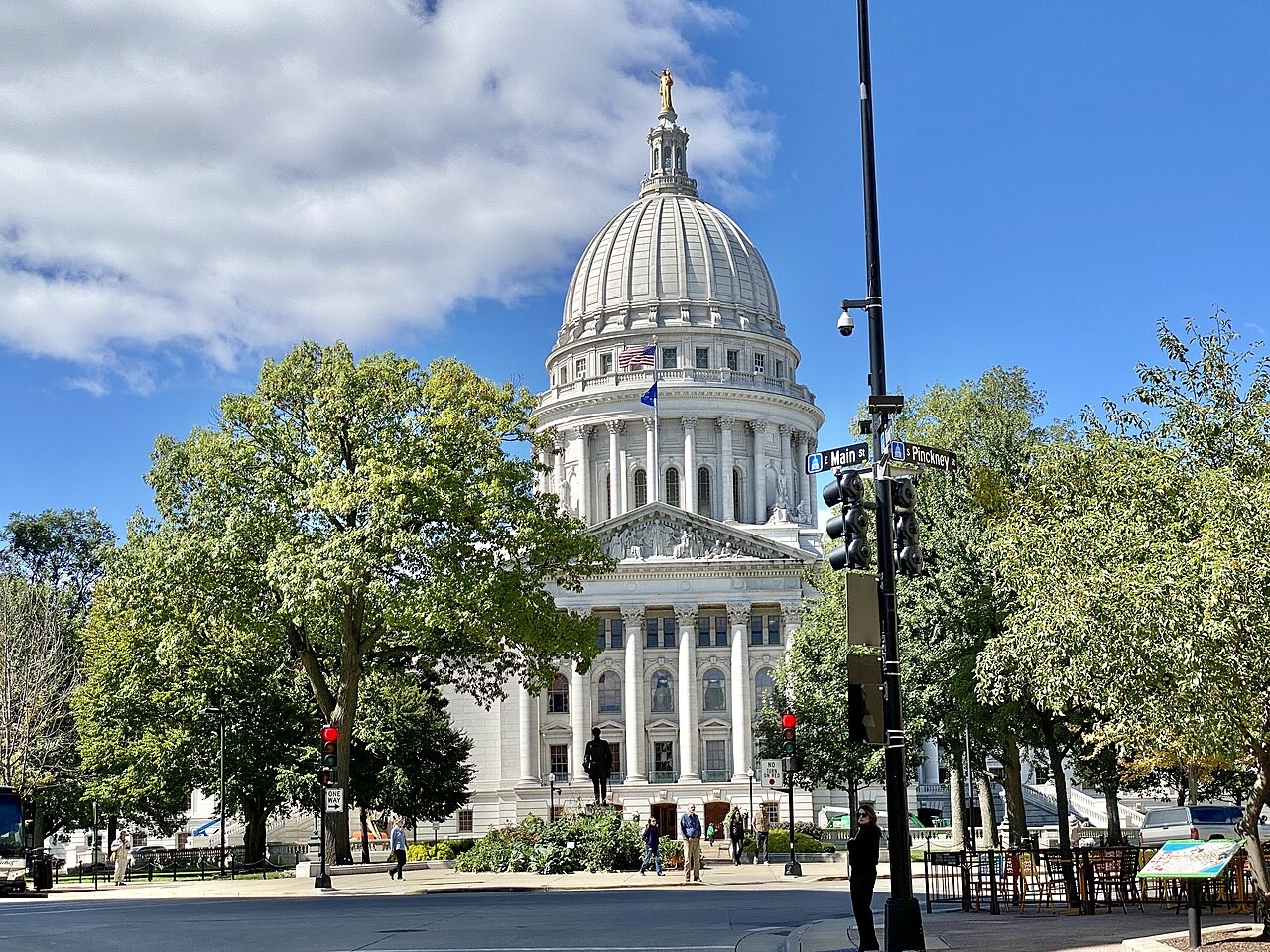
Wisconsin State Capitol in Madison
Setting photograph for geographic context.
Read the evidence notes
Wisconsin State Capitol in Madison. The image does not depict the crime or an evidence exhibit.
The image does not depict the crime or an evidence exhibit. The source and reuse terms are linked below.
Warren LeMay from Covington, KY, United States · Image source · CC BY-SA 2.0
★ Key evidence used in a conviction · ✓ Exclusion or reversal · ◇ Disputed evidence · ⊘ Excluded at retrial · ◆ Identity / investigative finding, not a conviction. A symbol does not mean one item proved the whole case.
Follow the locations
Put the story on the map.
Follow the dated entries, then select an event to find its regional setting. Shared-location pins open a group of events. Evidence symbols identify important findings and their limitations.
Open the map in its own window ↗Sources & further reading
- State v. Burch · Wisconsin Supreme Court, majority and separate opinionsInvestigation, phone and Fitbit evidence, majority and separate opinions.
- WBAY · George Burch sentencingSentence and Brown County proceedings.
- Wisconsin Court of Appeals · certificationQuestions certified for review.
- U.S. Supreme Court · January 10, 2022 order listDenial of George Steven Burch’s petition for review in No. 21-6290.
Editorial review: 2026-11-12 · 426 words