A winning McDonald’s game piece could pass inspection perfectly. It could have the right printing and be worth exactly what the contest said. The question the FBI ended up asking was how anybody got hold of it. For some of the biggest prizes, the answer began well before somebody opened a box of fries. [1] [2] [3]
McDonald’s hired a contractor, Simon Marketing, to run promotions. Simon’s security director, Jerome Jacobson, was responsible for getting valuable game pieces into distribution. That job put the prizes in his hands before they had a chance of landing in anyone’s lunch. [1] [2]
The Bushranger · Image source · CC BY-SA 4.0

Someone to claim the prize
Jacobson diverted high-value pieces and passed them through recruiters. A recruiter could find someone to turn in a piece and collect the money. The company could verify the piece and pay the claim. The claim gave investigators a name at one end of the transaction. They still had to work back to the people who supplied it. [1] [2]
In August 2001, federal authorities announced arrests in Operation Final Answer. They alleged that more than $13 million in high-value prizes had been corruptly claimed in the conduct they described. A grand jury in Jacksonville later returned an indictment naming forty-three defendants. Jacobson pleaded guilty to conspiracy and mail fraud in 2002. He received thirty-seven months in prison. [1] [2] [3] [5]
PicoOrdinalo · Image source · CC BY-SA 4.0

Four claims and a question about what people knew
George Chandler, Jerome Pearl, Kevin Whitfield and John Henderson were convicted of conspiracy to commit mail fraud. The government argued that the defendants had falsely presented themselves as legitimate winners. The trial judge ultimately told jurors the charge required proof they knew the pieces had been stolen or unlawfully acquired. [1]
The Eleventh Circuit examined what the four defendants had been shown to know about Jacobson’s arrangement. He had deliberately kept recruiters separate. A person could know who handed them a piece and have no idea who supplied it to the recruiter, where it came from or who else was involved. The judges found the evidence insufficient to prove the charged agreement and directed acquittals for the four. Jacobson’s guilty plea stood. [1]
Quintin Soloviev · Image source · CC BY 4.0

The competitor who went to court
A Burger King franchisee later argued that McDonald’s advertising about the promotions had diverted customers from its restaurants. The Eleventh Circuit affirmed dismissal of that suit in 2007 on the question of who could bring the false-advertising claim. By then the federal record could trace some prize pieces from the man who controlled their distribution to the people who submitted them. It took another kind of evidence to establish what each person along the way had agreed to do. [1] [4]
Case brief
Jacksonville and Lawrenceville, Florida · 2001
- Recorded outcome
- Jerome Jacobson pleaded guilty and received 37 months. In Chandler, the Eleventh Circuit vacated four other convictions and directed acquittals.
Key moments
People in this case
- Jerome Jacobson
Pleaded guilty in the promotional prize fraud
Photo at source · Milwaukee Journal Sentinel via Imagn Images and Reuters Connect
Look closer · 9 visuals
Inside the evidence.
Open a visual to explore what it contributed to the case—and the limits of what it shows. Photographs, historical reproductions and original illustrations are individually labeled. Open the notes for each image’s source, credit, and limitations; setting photographs do not depict crime scenes.
The point of diversion
Original editorial illustration — not an actual evidence photograph or exhibit.
Read the evidence notes
The contractor handled the high-value pieces.
A genuine piece may still have an unlawful source.
A piece and its proceeds
Original editorial illustration — not an actual evidence photograph or exhibit.
Read the evidence notes
Authorities described pieces and money moving through intermediaries.
The chain does not establish what every participant knew.
The government’s early total
Original editorial illustration — not an actual evidence photograph or exhibit.
Read the evidence notes
The 2001 announcement described its initial estimate.
The figure is not a final restitution total.
Proof of an agreement
Original editorial illustration — not an actual evidence photograph or exhibit.
Read the evidence notes
The court distinguished separate links from agreement to one conspiracy.
Acquiring a piece does not alone prove knowledge of theft.
Two criminal outcomes
Original editorial illustration — not an actual evidence photograph or exhibit.
Read the evidence notes
The Chandler decision affected the four appellants.
It did not undo Jacobson’s plea.
The franchisee’s claim
Original editorial illustration — not an actual evidence photograph or exhibit.
Read the evidence notes
The 2007 civil case concerned a competitor’s claimed injury.
It did not adjudicate each customer’s loss.
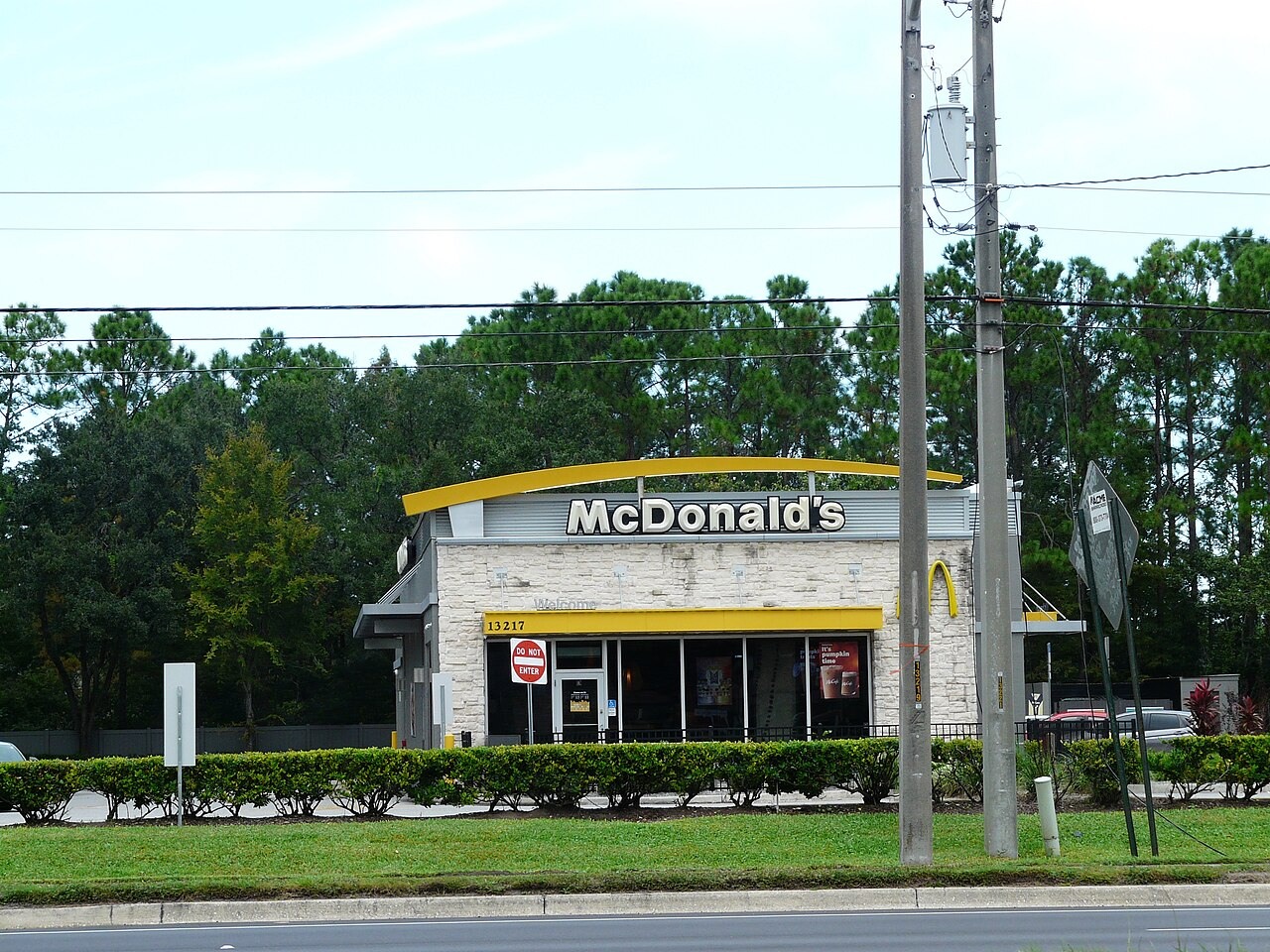
A McDonald’s restaurant on Atlantic Boulevard in Jacksonville
Setting photograph for geographic context.
Read the evidence notes
A McDonald’s restaurant on Atlantic Boulevard in Jacksonville. The pictured restaurant is unrelated to the documented fraud.
The pictured restaurant is unrelated to the documented fraud. The source and reuse terms are linked below.
The Bushranger · Image source · CC BY-SA 4.0
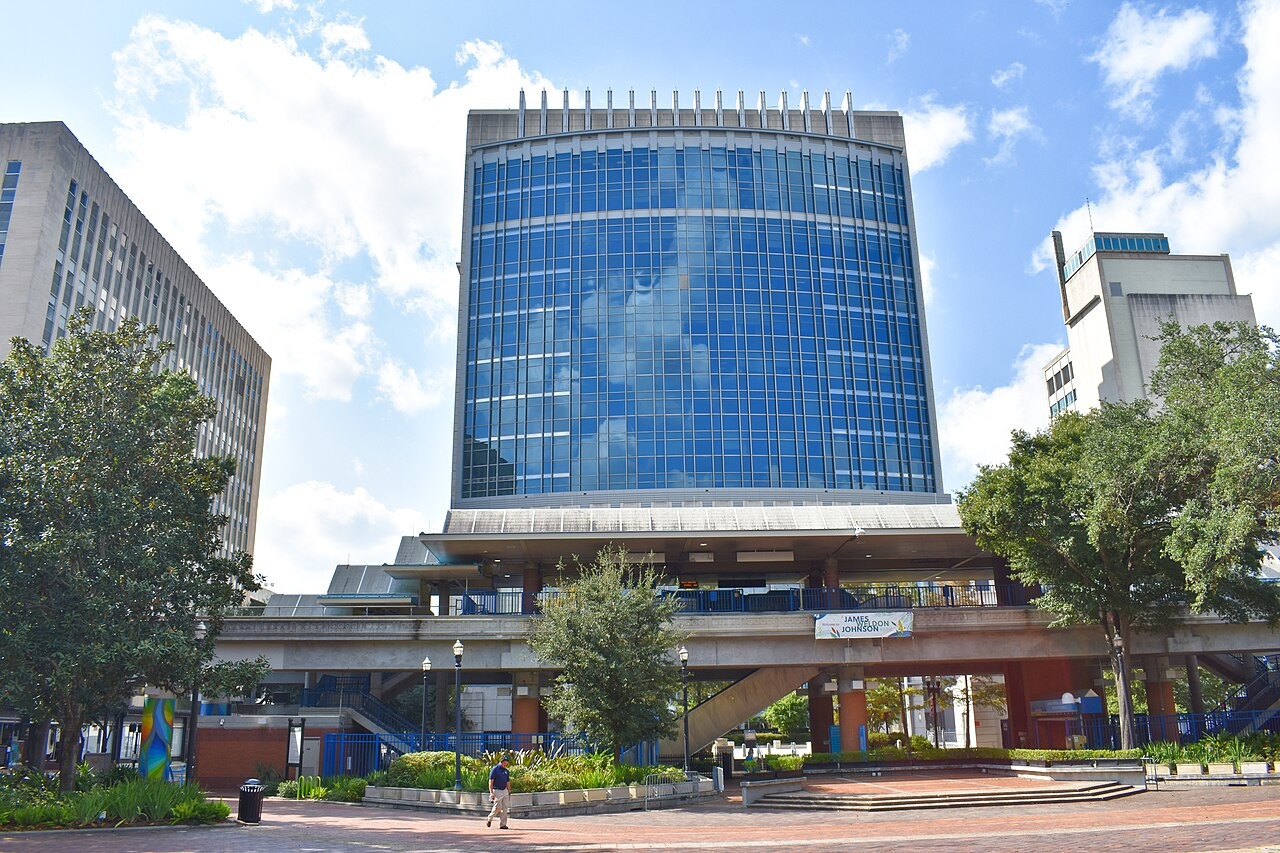
The Bryan Simpson United States Courthouse in Jacksonville
Setting photograph for geographic context.
Read the evidence notes
The Bryan Simpson United States Courthouse in Jacksonville. The present courthouse provides city context. The building postdates the original trial.
The present courthouse provides city context. The building postdates the original trial. The source and reuse terms are linked below.
PicoOrdinalo · Image source · CC BY-SA 4.0
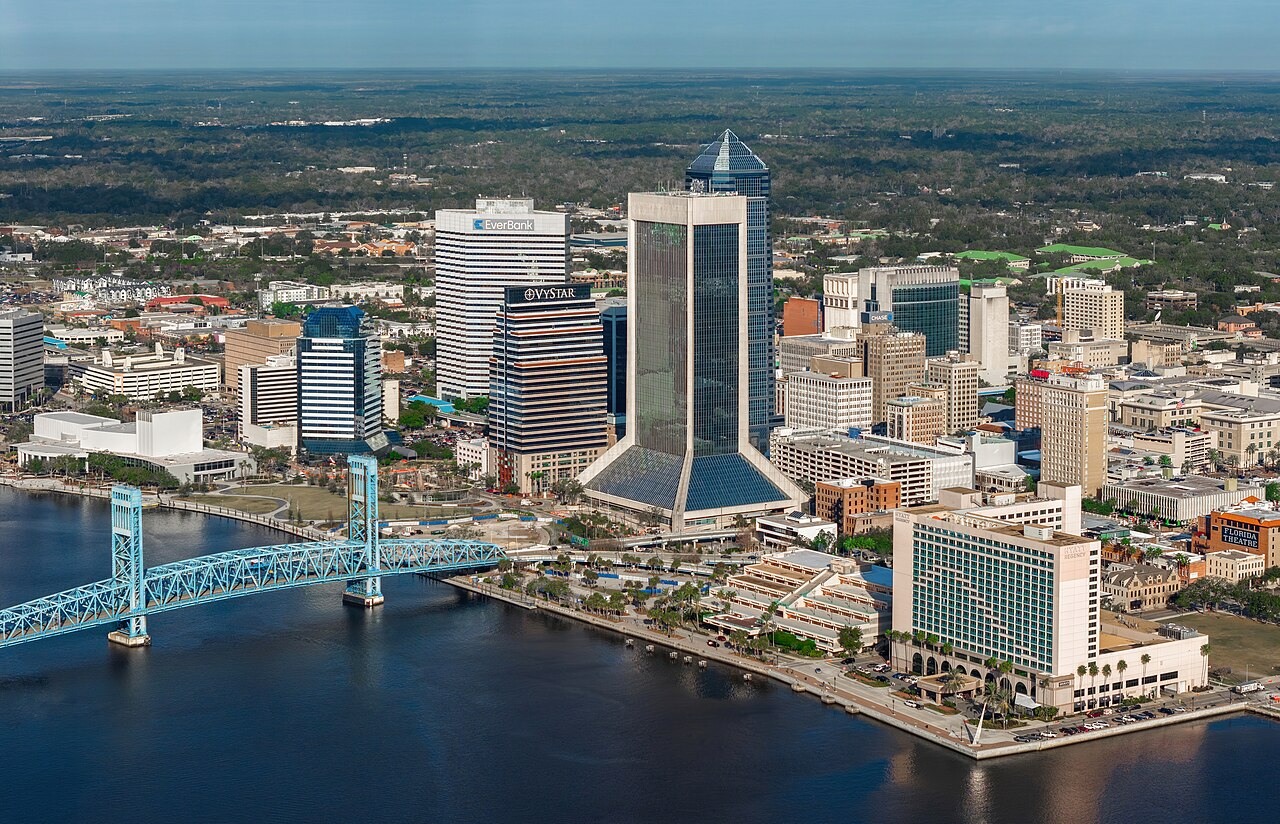
Jacksonville’s skyline and the St. Johns River
Setting photograph for geographic context.
Read the evidence notes
Jacksonville’s skyline and the St. Johns River. The image does not depict the crime or an evidence exhibit.
The image does not depict the crime or an evidence exhibit. The source and reuse terms are linked below.
Quintin Soloviev · Image source · CC BY 4.0
★ Key evidence used in a conviction · ✓ Exclusion or reversal · ◇ Disputed evidence · ⊘ Excluded at retrial · ◆ Identity / investigative finding, not a conviction. A symbol does not mean one item proved the whole case.
Follow the locations
Put the story on the map.
Follow the dated entries, then select an event to find its regional setting. Shared-location pins open a group of events. Evidence symbols identify important findings and their limitations.
Open the map in its own window ↗Sources & further reading
- United States v. Chandler · Eleventh CircuitIndictment, trial, knowledge and agreement issues, vacatur and acquittal orders.
- FBI · promotional prize case arrest announcementInitial allegations, Simon office, federal venue and prize estimate.
- U.S. Justice Department · Operation Final Answer remarksCharging stage explanation of alleged chain and case announcement.
- Phoenix of Broward, Inc. v. McDonald’s Corp. · Eleventh CircuitCivil action, criminal plea history and dismissal of the franchisee’s claim.
- Los Angeles Times · Jacobson sentencing reportThirty-seven-month sentence in Jacksonville.
Editorial review: 2026-11-12 · 439 words